Most centers handle disposable handwear covers in huge volumes, yet few understand precisely where those handwear covers pursue use, what they cost past the invoice, or just how to catch worth from them once again. A well-run PPE gloves recycling audit brings that photo into focus. It shows which handwear covers you buy, just how they move throughout shifts and zones, where they end up, and which portion can be steered right into a cleaner, more secure round economy design. Do it well and you get greater than diversion. You unlock data that reduces invest, reduces injury danger, and shows ecological responsibility with evidence, not slogans.
I have actually walked sites where handwear cover containers overruned near gowning areas while other job cells ran empty. I have sorted liners that must never have been in contact with solvents, and I have seen supervisors find the silent leakage of cash that is disposable PPE. The companies that win deal with the audit like a living procedure. They review it, tighten it, and develop practices around it. Below is just how to approach an audit with that attitude, and what to do with the insights once you have them.
What an audit actually measures
A PPE gloves recycling audit asks four questions and backs them with tasting, receipts, and monitoring. Initially, what gloves do you buy, by SKU and material. Second, where do they go and exactly how promptly do they pass on. Third, which portion can be recuperated with glove cleansing or material recycling without running the risk of cross-contamination. Fourth, what the overall cost and return appear like when you relocate from trash to a round stream.
Some auditors leap to diversion rates. That number aids, but it conceals the vehicle drivers. You wish to damage the problem right into identified components: nitrile versus latex, cleanroom versus basic responsibility, food contact versus paint cubicle, high-risk contamination zones versus administrative areas. The even more plainly you map those parts, the cleaner your recycling stream becomes, and the stronger your economics.
Build your baseline without interrupting work
Start with buying and stock records. Draw a rolling year if you can. Plot quantity by product and density, different sterilized and non-sterile, and emphasize glove designs special to a procedure. That dataset becomes your foundation. You will certainly confirm it on the floor.
Next, walk the facility with a note pad and a range. Visit every factor where gloves are kept, worn, altered, and disposed of. Do it throughout all changes, consisting of evenings. Security culture modifications after 6 pm in such a way that spread sheets do not capture. In one distribution center, a 2nd change used much heavier handwear covers because the incoming pallets had sharper strap seals. Procurement had no concept, and the audit revealed an inequality between assumptions and reality. Those information issue when you propose changes.
Finally, gather your waste and recycling service invoices. If you can divide streams by compactors or roll-offs, also much better. Capture the charges for pulls and tonnage, plus interior labor. That data will feed your ROI calculator later.

Sampling that respects risk
You can not audit PPE gloves recycling by rummaging via arbitrary bags. You need regulated sampling that maintains personnel risk-free and maintains integrity. I have a tendency to use a short run of targeted pluck each zone, nabbed and classified, after that evaluated and arranged at a committed table with proper PPE and a spill set. The procedures differ by industry, yet a useful pattern has actually emerged.
Administrative and low-risk locations, like workplaces or non-production laboratories, usually create the cleanest stream. Below, you can separate gloves by product and color with minimal hazard. Manufacturing and warehousing call for even more caution. Identify handwear covers exposed to oils, adhesives, powder paint, food healthy proteins, or organic agents. If you have any kind of red-flag impurities, treat those areas as out of extent for recycling unless you have a qualified glove cleaning process and a documented validation of cross-contamination prevention.
Healthcare and life scientific researches require a stricter split, with chain-of-custody for regulated medical waste. Do not flex those policies to chase diversion. You can still locate recyclable volume in support locations, shipping, and environmental solutions wardrobes, yet you need to appreciate the hazard lines.
It helps to mark handwear cover discard points with an easy audit label for one week. Note the division, the shift, and the designated stream: trash, recycling, or cleanroom recover. After that, pull representative bags mid-week and end-of-week to make up variability. Data improves when you see the rhythm of the operation.
Sorting categories that operate in the genuine world
Over the years, I have arrived on a few practical sorting classifications. You can tune them to your site, but maintain the reasoning simple.
Nitrile handwear covers in excellent condition, no visible contamination, and from low-risk areas. This is frequently your prime reusing feedstock. It has a tendency to be the majority by volume in production and logistics.
Latex or poly gloves made use of in food prep or light setting up. Some programs approve them, some do not, and glove cleaning end results vary. If you create a lot of these, talk with your partner early.
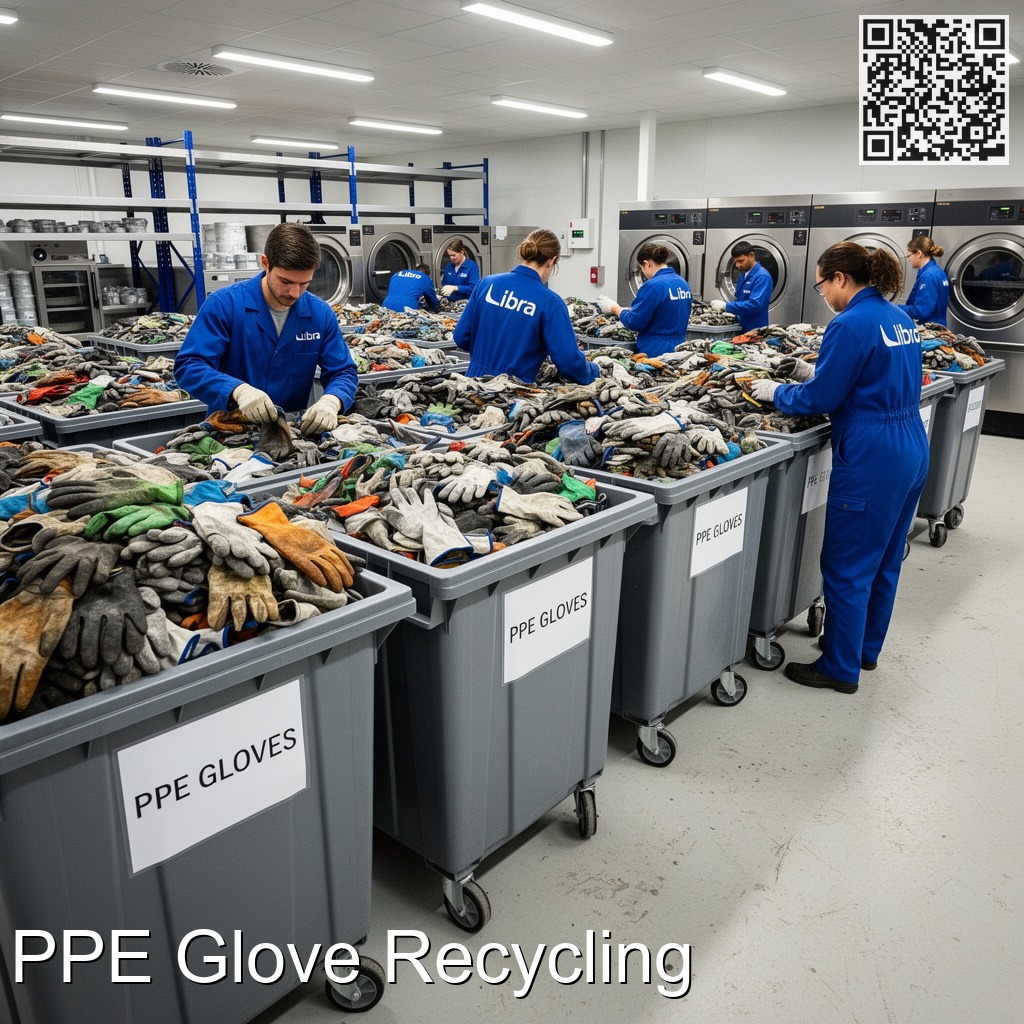
Cut-resistant liners and specialized gloves. These might be qualified for separate fabric or polymer healing, or they may most likely to resale if in good shape. They do not belong combined with slim disposable PPE.
Visibly infected gloves. Oils, solvents, adhesives, hefty dust, or biological residues move these out of conventional recycling. You may catch them via a dedicated procedure or exclude them altogether.
Unknowns. This classification must diminish gradually. Early audits constantly have a handful of uncertain items. As you tighten labeling and training, the stack fades.
The examination of a good group set is whether line workers can follow it without a handbook. If it takes greater than a short poster and 5 mins of coaching, you most likely produced way too many buckets.
How cross-contamination prevention drives your design
If you desire your program to last, develop it around cross-contamination prevention. Individuals change handwear covers at irregular times. They throw in the closest container, particularly under time stress. You require evident signage and bin placement that straightens with how the job in fact streams. Maintain reusing containers closest to exits from low-risk locations, not hidden behind gear or inside supply spaces. Usage shade coding that matches the glove kinds where feasible, yet do not overdo the palette.
I when saw a center that attempted to sort gloves right into 4 streams with 4 shades. The added containers confused staff, contamination crept in, and spirits sagged. We streamlined to 2 streams, added much better labeling, and the contamination rate went down below 5 percent. That type of renovation is not magic. It comes from eliminating decisions at the factor of discard.
You likewise need a clear policy for gloves that touch both clean and filthy surface areas in a job. Think of forklift vehicle drivers that load pallets and afterwards sign documentation. Provide a specific instruction: if unsure, trash the handwear cover. The expense of a little additional waste is much less than the cost of polluting your recycling. The exact same concept applies to transition periods in assembly line. During teardown and arrangement, anticipate more contamination and favor caution.
Where handwear cover cleansing fits
Glove cleansing has enhanced recently. Some companions can wash specific handwear cover types and return them for reuse, particularly heavier-duty multiple-use PPE. For slim nitrile disposables, cleaning frequently transforms them into a secondary-use stream instead of returning them to the initial task. The viability depends upon consumer demands and accreditation. If you run in a controlled or regulated setting, you will likely keep fresh handwear covers on the line and course the made use of gloves right into material reusing as opposed to cleansing for reuse.
Still, there are pockets where handwear cover cleansing adds worth. Maintenance stores, shipping rooms, and non-sterile labs often approve cleansed handwear covers for harsh tasks. If you evaluate this, record the process. Track failing prices, user acceptance, and any type of unexpected wear. A little pilot throughout 2 or 3 departments will certainly tell you greater than a pamphlet ever will.
Build an ROI calculator that execs trust
Your CFO desires numbers, not a sustainability motto. Gather the inputs with treatment. Beginning with your current prices: unit rate per handwear cover, typical usage per person per change, month-to-month handwear cover spend, and garbage disposal expenses tied to handwear cover waste. Include labor for managing waste, especially if staff walks fars away to a compactor. I have seen 15 mins per change each vanish right into waste runs.
Then, map the program expenses: containers and signage, internal logistics, training time, and the per-pound or per-bag fee for a service like Libra PPE Recycling. If there is revenue share from product healing, include it, yet be conventional. Markets fluctuate.
Finally, version the modifications: decreased general waste pulls, diversion tonnage, and any type of reduction in lost gloves because of far better giving controls. Include a level of sensitivity analysis. What occurs if contamination prices creep from 5 percent to 12 percent, or if glove costs stop by 10 percent. A great ROI calculator reveals a variety and keeps in mind the assumptions. Execs will ask, and you will certainly be ready.
Here is a simple structure that has actually worked for me across websites with various scales.
- Baseline handwear cover invest and lose price each month, separated by department. Program cost each month, consisting of amortized containers and single setup. Diversion quantity and modified waste cost with less pulls or reduced tonnage. Net change in invest, shown as a monthly and annual figure.
Keep the math clear. If you utilize exterior figures for recycling rates or contamination thresholds, point out the source or discuss your inner pilot outcomes. That quality builds trust.
The role of your recycling partner
A solid companion does not just pick up bags. They assist develop the flow so the bags consist of the right material. Search for a supplier who understands PPE gloves especially and can talk to the subtleties of nitrile versus latex, slim movie versus thicker recyclable styles, and what a round economy version actually appears like in your industry. Libra PPE Recycling is just one of the names I have actually seen in tasks where the assistance went beyond logistics. They assisted with signage, experienced supervisors, and returned data on contamination and weights with adequate information to refine the program.
The companion need to use certificates of reusing or destruction as needed, image documents when you launch, and comments loopholes. If they find a recurring contaminant like tape heaps or blade wrappers in the handwear cover bags, they need to inform you swiftly and recommend a solution. The very best connections seem like continual renovation, not a contracted out chore.
Training that sticks without slowing the line
Most programs do well or stop working in the very first 2 weeks. That is when practices form. Train supervisors initially. They are the translators between your strategy and daily work. Provide a straightforward message: where to throw which glove, exactly how to deal with apparent pollutants, and what to do if a container overfills. Concentrate on the "why" in a sentence or two. People care extra when they understand the function, specifically when it connects to safety and security and Environmental responsibility.
Then, train operators in other words ruptureds at the start of shifts. Make use of one poster at each terminal, not three. Place the bins in place before the training, so individuals can act on the guideline instantly. Inspect the containers mid-shift and at end of change for the very first week, and be visible about fixing mistakes. The tone issues. Treat mistakes as signals, not failures. I once saw a supervisor tape a photo of a contaminated bag to a break space door with a snide caption. The next week's contamination doubled. Pity rarely improves sorting.
Measurement tempo that avoids audit fatigue
You do not need a full-on audit on a monthly basis. Begin with a deep dive, then relocate to a light-touch rhythm. Consider bags once a week for the first quarter, record contamination prices, and hold a brief standing conference with a floor bring about examine the fad. After the program supports, change to regular monthly talk to a quick quarterly deep dive that includes a couple of bag sorts.
Track 3 metrics across time. Overall handwear cover acquisitions by department, diversion volume, and contamination price. If your overall glove acquisitions climb while manufacturing stays level, ask why. Occasionally a small adjustment in procedure activates extra frequent glove adjustments. Sometimes a dispenser moved to a troublesome place, and people take two sets to stay clear of a journey. Metrics are the conversation starter, not the verdict.
Edge cases and practical boundaries
Not every handwear cover belongs in recycling. If your procedure uses cytotoxic representatives, specific bioburden dangers, or high-solvent settings, those gloves avoid. State and nationwide guidelines vary, and enforcement can be stringent. Treat your companion's approval list as the floor, not the ceiling. When doubtful, exclude the item and request guidance.
Color can complicate the tale. Blue nitrile may be easy to kind, yet black nitrile made use of in auto work frequently reveals much less visible contamination and gets store dirt. In those locations, boost training and carry out extra very early check. On the various other end of the range, white cleanroom gloves might show every speck. That does not make them dirtier. It simply makes people stress. Offer clear requirements for acceptance, ideally with photos.
Disposable handwear cover thickness issues for downstream handling. Slim 3 to 4 mil handwear covers small in a different way than 6 to 8 mil variants. If your site makes use of both, segregate by location or time to stop blending that might impact reusing effectiveness. You might not require separate containers if your companion accepts both, but you should a minimum of understand the mix.
Pulling purchase right into the loop
A recycling audit often surfaces mismatched SKUs. You could discover four almost identical nitrile gloves from various brand names across nearby cells. Combining to 2, with clear use cases, simplifies training and boosts sorting. Purchase can drive that standardization, but they require the audit information to justify it. Share the waste and contamination rates by handwear cover type if you have them. In one case, shifting to a slightly thicker nitrile glove decreased tear-offs mid-task, which reduced intake by 12 percent without reducing work.
Your requirement also creates take advantage of in provider talks. If you show a reliable PPE gloves recycling program and a steady handwear cover mix, vendors commonly discuss better terms, or they bring end-of-life remedies of their very own. Keep the door open, but see to it any type of supplier program matches your established circulation rather than changing it with a complicated exception.
How the circular economic climate model turns up on the floor
The expression sounds abstract till you see the pallets. Baled nitrile predestined for reprocessing has an unique look and weight. Team notification. If you can host a short trial or show where recycled product goes, do it. Some recyclers can trace a part of recuperated polymer right into certain downstream items. A poster with that said tale near the loading dock strengthens the effort. Even skeptical operators appreciate a tangible loop.
The circular model likewise suggests selecting devices that sustain it. Usage liners in containers to maintain them tidy, but avoid linings that complicate downstream processing. Label containers with durable tags instead of paper indicators that develop into garbage. Tiny details decrease friction.
Common risks and how to avoid them
Overcomplicating streams. 2 or 3 streams are flexible and practical. Exceed that and confusion rises.
Launching without supervisors on board. If frontline leaders do not possess the program, you will certainly battle a headwind.
Ignoring night shift. Several audits miss out on the irregularity that occurs after hours. Arrange visibility across all shifts throughout launch.
Treating glove cleaning as a silver bullet. It can aid in details situations, but the majority of non reusable https://www.librami.com/contact glove programs lean on material recycling. Establish expectations accordingly.
Letting bins move. Bins have a means of walking. Mark their impacts on the floor. If a container is not where individuals expect, they will toss in the closest trash.
A basic site rollout plan
- Week 1, intending and information draw. Purchase background, waste invoices, site map of handwear cover touchpoints. Week 2, on-floor monitorings and tasting. Tag throw out points, gather depictive bags, sort in a regulated setup. Week 3, companion selection and program style. Wrap up accepted materials, bin kinds, paths, and signage. Develop the ROI calculator with conservative assumptions. Week 4, training and launch. Manager instructions, brief driver sessions, bins in position, day-to-day checks. Weeks 5 to 8, stabilization. Weekly weigh-ins, contamination tracking, modifies to bin positioning and labels, quick wins communicated to staff.
Keep the plan noticeable. A straightforward timeline taped in the supervisor office assists preserve momentum.
Tying all of it along with clear reporting
At completion of the first quarter, publish a one-page summary for interior stakeholders. Consist of handwear cover purchase volume, diversion price, contamination rate, and internet cost impact. Include one short anecdote from the flooring, like a container relocation that cut misses out on in fifty percent. If you utilize a solution such as Libra PPE Recycling, include their monthly reports and any verifications they supply. Transparency builds persistence. Individuals will offer the program time if they see clear progress.
Share the ROI calculator inputs and the range of outcomes. If your finest instance showed a 15 percent internet cost savings and you landed at 8 percent, discuss the gap. Possibly glove prices shifted or manufacturing dipped. The sincerity pays rewards when you ask for little upgrades, like easier bins near a busy gowning room.
When the audit enhances safety
A glove audit commonly exposes more than waste. It reveals routines that enhance injury danger. In a steel construction shop, we observed regular double-gloving to make up for sharp sides. The audit identified the pattern, procurement sourced a somewhat harder glove, and double-gloving went down. Hand exhaustion decreased, and so did intake. A program framed around PPE gloves recycling provided a security win first and a waste reduction second. Numbers apart, that is the outcome individuals remember.
Cross-contamination prevention adheres to the exact same arc. Clear rules regarding where handwear covers pursue certain jobs decrease unintentional transfers of oil or dirt from one zone to another. That directly supports quality assurance, which is the heart beat of the majority of operations.
Final thoughts from the floor
A PPE gloves recycling audit repays when it values how work in fact gets done. Map your handwear cover types to the tasks, not to an idyllic workflow. Place bins where hands naturally relocate. Educate the simplest guidelines that still protect quality and safety. Bring purchase, EHS, and procedures into the same discussion. Utilize your ROI calculator to keep leadership engaged, however lean on real tales from the flooring to keep the team invested.
Programs like Libra PPE Recycling can help with the logistics and provide the coverage backbone. Your work is to shape the interior behaviors that feed those bins with tidy, qualified material. Do that, and the round economy model quits being a pitch and becomes part of everyday procedures. The landfill bill reduces, the flooring looks cleaner, and the labor force sees their initiative mirrored in legitimate numbers. That is just how a recycling audit becomes a much better means to run the place.
Libra Industries Inc
1435 N Blackstone St, Jackson, MI 49202
+15177875675
| Place ID | ChIJt_HMH44vPYgRNbiD22DpHYo |
| CID | 9952367353767639093 |
| Business Profile ID | 6301257705288912858 |
7H9Q+2G Jackson, Michigan
| Coordinates | 42.26760060, -84.41112540 |
 Ask ChatGPT
 Ask Grok
 Ask Perplexity
 Ask Claude
 Ask Google AI
 Ask You